Pages

Thursday, 8 November 2018

Fruit and Vegetables Salads

The quality of fruits and vegetables:
 1. Some of the qualities we looked for in our fruits and vegetable were the firmness of the fruits and veges. We made sure that they weren't too mushy and checked for any signs of rotting. We also checked that they were bright in colour.

2. It's important to cut vegetables evenly so that when it comes to cooking them they all cook evenly. We cook our starchy vegetables first because they take longer to cook.

3. For our couscous salad we used pesto for the dressing. We mixed all the the ingredients together enough so that the pumpkin and feta cheese wouldn't get all mushy together. We put the salad into a deep bowl so that everything was to stay in place instead of putting it in a plate where everything would fall apart. Some additional ingredients we added to our couscous salad were the pine nuts to give our couscous salad that crunch.


For our Ceasar salad we made our own Ceaser sauce to add to our salad. We arranged the salad onto a plate and created layers so that the chicken was able to soak up the flavouring from the egg. Additonal ingredients we added to our salad was the egg for the nutrients and crutons to give your salad that crunchiness.

Our vege baskets were made up of mixed vegetables wrapped in pastry and cooked for about 20 - 30 mins.

The fruit flan that we made consisted of us making our own base and filling. We used different fruits that would work together flavour wise with the filling we made to give it a tropical sort of taste. We also added a melted chocolate to the fruit flan for extra sweetness to our flan.


Friday, 21 September 2018

Steaming

Dumplings

  1. The type of steaming used for cooking our dumplings was low-pressure steam. This is done by frying the dumplings and then we put a bit of water in the frying pan and put the lid over the dumplings and all them to steam.
  2. Photos

3. The qualities we were looking for in our ingredients for the dumplings were that there were no blemishes in the cabbage and that it was bright in colour.
4. Serving quantity for dumplings was half a dozen per person.
5. We mixed all the ingredients together and made sure that they were cut into small and even sizes to make sure that they would cook evenly. 
6. Firstly we fried our dumplings in a pan on the stove for a couple of minutes till they were nice tan colour on the outside. We then put a bit of water in the pan and put a lid over the pan and let the dumplings steam for a couple of minutes. This was done at 100 degrees.

Lemon Fish
1. The type of steaming used for our lemon fish with vegetables was low pressure steam. This was done in a bamboo steaming basket that was on top of a pan filled with a bit of water.
2. Photos


3. The qualities we were looking for in our fish were that it was bright in colour and that there were no signs of it beginning to rot. As for our vegetables we checked to see that they were bright in colour.
4. The quantity of fish for each person was a palm sized piece of the fish and as for our vegetables we had to have 2-3 and a half cups of veges.
5. For our fish we had to put in baking paper and seasoned it with salt and pepper, lemons and spring onions. For our vegetable we had to slice our carrots to make sure they were the same size as our peas and wrapped them small bunches with string to be ready for steaming.
6. For both out fish and veges we put a bit of water into a pan and then out our fish and veges into a steaming basket. This was done at a low pressure steam. Our fish took about 10-12 mins to steam. We checked to make sure our fish wasn't over or under cooked by being able to put a knife through and for it to come out nice and smoothly without it falling apart. But as for our veges it only took a couple of mins. Once they were done steaming we made sure that the veges didn't look all mushy or that they wouldn't fall apart.


Friday, 3 August 2018

Grilling

Type of Grilling used
  1. For our bacon and pancakes, we grilled our bacon under the grill.
  2. For our steak sandwich, we grilled the steak between the sandwich press.
Quality Checks

For our veggies, we wanted to check that there were no blemishes and they firm and bright in colour. As for our bacon, we checked to see that it wasn't any sign of mould on them and that they didn't smell off. For our steak, we checked to see that the colour of the steak wasn't green or black and that it had a slimy texture to it.

Degree of Cooking

We cooked the bacon for about 15 - 20mins in the oven at 200 degrees till it was crispy, golden brown. For our steak, we pressed it in between the sandwich press for a couple minutes till it was brown and it had the grilled lines on the steak.


Presentation


Our pancakes were accompanied by bananas along
with golden syrup and bacon. Each person had two pancakes each and half a banana chopped up and put on top of the pancakes.


Steak sandwich was accompanied by with aioli sauce and vegetables. Each person had a palm-sized sized sandwich


07/08/18
1. Kebabs - lamb

Quality checks 
We checked that the colour of the meat was red as an indication that the meat was fresh. Also checked that the meat was nice and firm and that it sprung back nicely which also meant that it was fresh and if it didn't spring back nicely then it would've been a bit old. Also, check the smell in case it smelt a bit off and rotten. We then trimmed the fat off the steak and cut them into serving size pieces.

Degree of Cooking
We cooked our lamb kebabs on the stove at a temperature of 70 - 80 degrees for about 10 - 15 mins.

Presentation
Our lamb was accompanied by red onions and each person had 2 kebab sticks each. 

Friday, 15 June 2018

Boiling Assessment

Boiling

Part 1
At the beginning of our practical we checked that our vegetables, eggs and potatoes were clean and free of any soil, they weren't damaged, they were an even shape and size and they were firm and soft and not soft and spongy. We also checked that it didn't smell off and that it wasn't expired. 


Part 2
When boiling the veges and eggs we made sure that they were cooking at the right temperature and that they were cooked properly for the correct amount of time. So for the veges we needed to cook them for about 10-20 mins at 100 degrees and for our eggs we needed to cook them for about 5-10 mins at 100 degrees. 


Part 3

When presenting your food your dishes should look like alike and the proportions for each person is the same and reasonable. A proportion for each person it should be 2 medium eggs, 110g per person of root vegetable, 125g of tuber vegetables and 100g of green vegetables.


Mashed potatoes and eggs with bacon
Schnitzel with baby carrots and peas
Scotch egg with salad


Thursday, 7 June 2018

Knife Safety

138285 - Handle Knives

Occasion 1 - Fruit Salad

Before working just make sure that your area is clean and ready for use. To make sure that the chopping board was secure we placed a wet cloth underneath the board to prevent it from slipping it off the bench.


When walking around the kitchen you must remember to hold your knife in a sensible manner to avoid hurting anyone or yourself. Before using your knife you must check your knife is clean and sharpened. The photo below is a demonstration of how to sharpen your knife. You must hold your knife at 45 degree angle and sharpen from one end to the other.


Once you have finished cleaning your knives are stored in a safe manner and in a suitable cupboard or draw that is kept out of reach of children. 

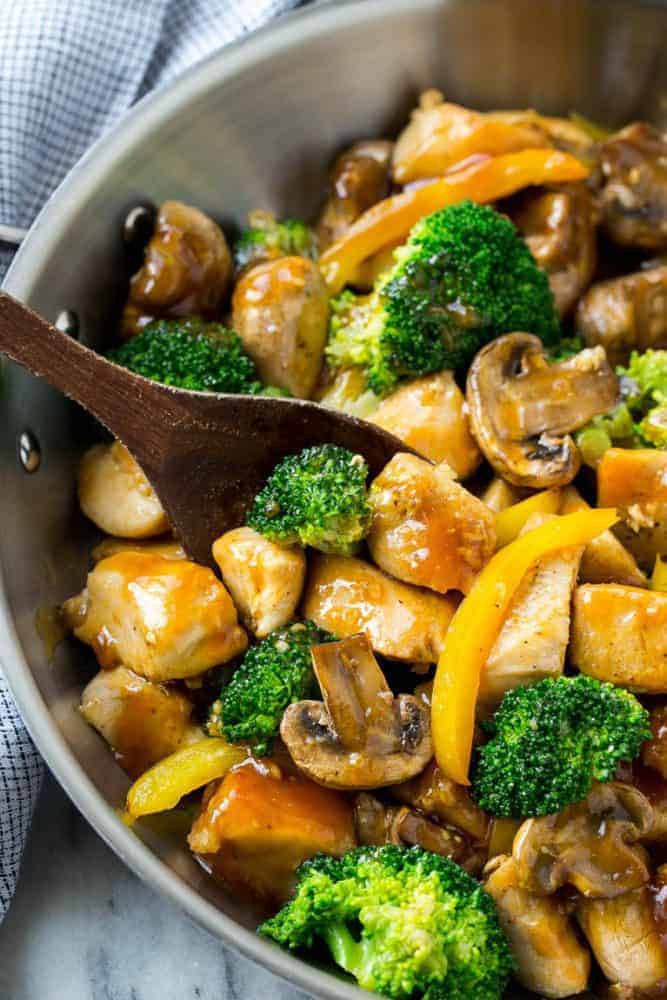
Chicken Srir Fry Recipe

INGREDIENTS
  • 1 tablespoon + 1 teaspoon vegetable oil, divided use
  • 1 cup broccoli florets
  • 1 cup mushrooms, halved
  • 1 yellow bell pepper, cored, seeded and thinly sliced
  • 1 pound boneless skinless chicken breast, cut into 1 inch pieces
  • salt and pepper to taste
  • 4 cloves of garlic, minced
  • ¾ cup chicken broth
  • 1½ teaspoons sugar
  • 1 tablespoon soy sauce
  • 2 teaspoons cornstarch
INSTRUCTIONS
    This garlic chicken stir fry is a quick and easy dinner that's perfect for those busy weeknights! Cubes of chicken are cooked with colorful veggies and tossed in a flavorful garlic sauce for a meal that's way better than take out!
  1. Place 1 teaspoon of oil in a large pan and heat    over medium high heat.
  2. Add the broccoli, mushrooms and bell pepper to the pan. Cook for 5-6 minutes or until vegetables are tender.
  3. Remove the vegetables from the pan; transfer to a plate and cover with foil to keep warm.
  4. Wipe the pan clean with a paper towel, then heat the remaining tablespoon of oil over high heat.
  5. Add the chicken to the pan in a single layer and season with salt and pepper to taste.
  6. Cook for 3-4 minutes per side, or until chicken is browned and cooked through.
  7. Lower heat to medium, add the garlic and cook for 30 seconds.
  8. Add the vegetables back to the pan.
  9. In a small bowl, whisk together the chicken broth, sugar, soy sauce, sesame oil and cornstarch,
  10. Pour the sauce over the chicken mixture and bring to a simmer.
  11. Simmer for 1-2 minutes or until sauce has just thickened.
  12. Serve immediately, with steamed rice if desired.

Tuesday, 17 April 2018

Hospo 2018

167 - 05/04/18  

Task 3 - Before/During/After Food Handling


1. Here you can see that these hands have been washed using the 20:20 rule and are nice and clean and is also clear of jewellery. Jewellery is to be removed because this is where bacteria can grow from all the moisture in you hands and no nail polish is to be worn. This is to avoid your foods from being contaminated with germs to keep your customer from being sick. If there are any cuts or open wounds you are advised to cover them to avoid bacteria getting in your foods.


2.  As you can see in this photo hair is to be tidy and tided back or put up in a bun. This is to keep unwanted hairs from falling into  the food. Avoid any scratching or touching your hair, mouth and nose as this can cause any contamination.

3. In this photo you can see that the shoes are all tied up. This is to avoid tripping up when handling anything dangerous like knives or dropping food.

4. Wearing an apron while working in the kitchen is important. This is to prevent hairs, fibres and other things that carry bacteria get into food. 


5. You can see that in this photo we are using the appropriate chopping board for the right set of meat and using the same coloured knife for white meat. This is because this stops us from contaminating our foods with other foods. After handling raw food it's            important to rewash your hands to avoid                                                    contamination.


6. Food preparation is key; as you can see we put our foods into different bowls. This is to keep foods from mixing with each other. Use clean utensils when preparing your food is important as well.

7. Food preparation should allow your creativity to flow through and amaze your customers. Because the way it looks on the plate would tempt people to want to taste your creation.


Task 5 - Health and Safety

When working in the kitchen it's important to keep the kitchen nice and clean. So it's ideal to empty all rubbish bins after everyday; this is to prevent pests and unwanted animals being attracted to the kitchen. It's also important to wipe down all benches after use to avoid any bacteria from transferring onto something and creating an endless chain of bacteria. 
When storing food in the kitchen it's important to not store meat in the fridge and in a place where meat juice wouldn't drip onto your other foods and contaminate it. Foods should be stored in the right places at the right temperature. When storing leftover you should let it cool down before storing it in the fridge and shouldn't be left out on the bench for more than 2 hrs. After a couple days throw away any leftovers as they may be bacteria growing on them that can cause you to become ill.


Task 7 - Temperatures of Food
When cooking food (especially chicken) it's important to cook it to the right temperature. This is to prevent any food poisoning. To check the temperatures of our meat use a thermometer; for ground meat and meat mixtures it should be cooked to about 75 degrees celsius and for red meat it should be 70 degress celsius. When reheating your food you should reheat it to 60 degrees celsius and this to prevent food poisoning bacteria from spreading.